|
The following information is presented
here to provide historical details of the Intermed program from its establishment
in 1994 up to the closure of the Graduate Certificate and Diploma in International
Health and Development in 2020.
Core Course including Online
Foundational Subject and two-week intensive
The Intermed program was initially developed around
5 streams
-
Aspects of medical
mission.
-
Health care service
delivery, especially for primary health care.
-
Issues in public health.
-
Issues in clinical care,
especially infectious diseases and nutrition.
-
Electives.
The online Foundations subject
covers the biblical basis of development, community development and a
number of foundational topics such as global overviews of health,
illness and culture, patterns of illness, demography, principles of
primary health care, Indigenous health, travel health, introduction to
epidemiology and non-communicable diseases.
The two-week intensive covers public
health and clinical care (although some foundational material best delivered
face to face is also included) is conducted through lectures, seminars,
practical classes and group work.
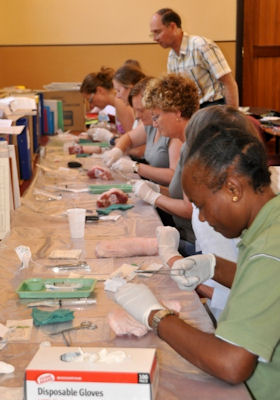
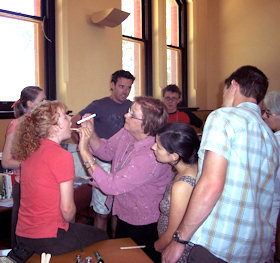
Practical sessions included in the
two-week intensive
For all participants:
For nurses and other health
professionals:
-
Simple consulting skills
-
Examination of the child
Learning Outcomes for the Graduate Diploma in International Health and Development
Knowledge
-
Demonstrate an integrated
knowledge of the key issues (including those relating to
marginalised groups such as women and children),
contributing factors, principles and practices involved
in community health and development in less resourced
and more disadvantaged contexts
-
Demonstrate a
well-developed understanding of the roles of and
challenges facing NGOs in health and development
activities in less resourced and more disadvantaged
contexts
-
Demonstrate a
well-developed understanding of the personal and
lifestyle issues associated with intercultural life and
work
-
Explain the relationship
between community development, public health and
clinical care in less resourced and more disadvantaged
contexts.
Skills
-
Formulate a theology and
philosophy of community health and development
approaches in less resourced and more disadvantaged
contexts.
-
Reflect critically upon
significant personal and professional experiences and
challenges related to the delivery of health and
development programs in less resourced and more
disadvantaged contexts.
-
Communicate and solve
problems in an appropriate fashion when working
cross-culturally in a team in less resourced and more
disadvantaged contexts.
-
Assess, manage and
control health problems related to infectious diseases,
nutrition and chronic non-communicable diseases in less
resourced and more disadvantaged contexts
-
Assess critically the
various program approaches used by NGOs in responding to
specific health and development issues in less resourced
and more disadvantaged contexts
Application of knowledge and
skills
-
Provide culturally
sensitive health care and/or education to individuals
and groups in less resourced and more disadvantaged
contexts.
-
Develop, implement,
monitor and evaluate best practice community health and
development programs in less resourced and more
disadvantaged contexts.
Optional 3rd week
An optional 3rd week followed immediately
after the completion of the two-week summer intensive. This week provided an
opportunity to gain additional practical skills in the areas of obstetrics,
dentistry, community development, musculoskeletal health and simple clinical skills.
The specific objectives for the various
components covered during the optional 3rd week were:
For obstetrics
-
describe the indications
and steps for manual removal of the placenta
-
detail how to manage postpartum haemorrhage
-
describe the steps in
the resuscitation of the newborn.
For dentistry
-
deliver the necessary education for a
community on preventive care through personal oral hygiene
-
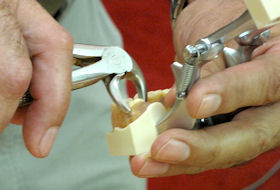
describe correctly the
steps in undertaking a simple extraction
-
recognize the
indications for referral for basic emergency dentistry
and restorative dentistry.
For community development
-
understand the process
of peace-building through the stages of denial, revenge,
forgiveness and reconciliation, at both the individual
level and the community level
-
describe the importance
of peace-building for community health and development.
For musculo-skeletal medicine
For additional clinical skills
-
update basic
life support skills (including iv cannulation)
-
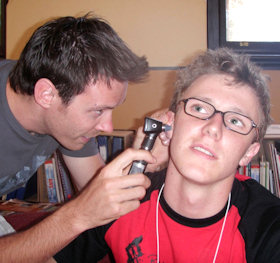
undertake ear toilet and
management of chronic otitis media
-
remove a foreign body
from the eye
-
demonstrate and teach
relaxation skills.
For doctors and laboratory
scientists:
-
make and interpret blood films
including malaria diagnosis
-
recognise the more common faecal
parasites on microscopy
-
know how to do a Gram stain, ZN
stain and urine microscopy
For nurses and other health
professionals:
-
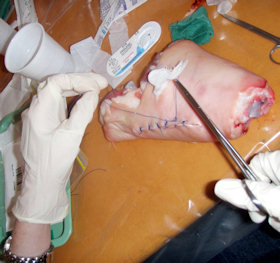
demonstrate basic suturing skills
-
demonstrate the incision and
drainage of an abscess
-
demonstrate how to do a simple
split skin graft
-
demonstrate how to conduct an
examination of the adult
Course Staff and Lecturers
Emeritus Professor Anthony Radford was the Course Coordinator from 1994 until 2008 when
Dr Douglas Shaw, who has qualifications and experience in international public health and
development, took on that role. Anthony remained active in the program as Course Advisor.
Both Anthony and Doug delivered a number of lectures, particularly on topics related to public health.
The lecturers for the program were drawn from a wide variety of backgrounds.
Almost all have had overseas experience, many having conducted international
health consultancies with groups such as WHO, UNICEF, the World Bank, AusAID,
World Vision and TEAR Australia. All were well qualified and many held senior
appointments at one or more of the three universities in Adelaide.
The table below provides details on the lecturers who were involved in the summer
schools between about 2016 and 2019 and who have given permission for their details
to be included here. Please note that the qualifications and positions held may no
longer be current.
|
BENSON,
Dr JILL
AM MBBS, DCH, FACPsychMed
|
Director, Health in Human Diversity Unit, Discipline of General Practice,
University of Adelaide. Senior Medical Officer, Migrant Health Service,
Adelaide. Kakarra Wilurrara Health Alliance. WHO Vanuatu
|
Refugee health
Indigenous health
|
|
BEN-TOVIM, Prof. DAVID
MBBS, PhD, MRCP, FRANZCP
|
Clinical Epidemiology and Process
Redesign, Flinders University
|
Recognition and management common mental
health problems
|
|
BOON, KATE
RN RM
|
Royal Flying Doctor Service
|
Clinical Skills:
Life support skills
|
|
BRADLEY, Dr HELEN
RN RM PhD
|
Adjunct Senior Lecturer, University of South Australia
|
Primary Health Care
|
|
CALDER, MARGARET
BA, DipT, MURP (Master of Urban &
Regional Planning)
|
Consultant in Global Education
|
Views of development
|
|
CROMPTON, Assoc Prof JOHN
MBBS, FRANZCO, FRACS
|
Consultant Ophthalmologist and Clinical
Assoc Prof., Discipline of Ophthalmology
and Visual Sciences, University of
Adelaide and Royal Adelaide Hospital
|
Recognition and management of common eye
conditions
|
|
ELDER, SHELLEY
RN RM
|
Midwife
|
Support for practical obstetrics at the
Women and Children's Hospital
|
|
FORSYTH, Prof KEVIN
MBChB, MD, PhD, FRACP, FRCPA
|
Associate Dean and Professor, Paediatrics
and Child Health, Consultant
Paediatrician, Flinders University.
President International
Pediatric Academic Leaders Association
|
Acute and chronic respiratory illness in
children
Principles in examination of the child
|
|
FUNG, Dr LESLIE
BDS, MDS (Prosthodontics)
|
Lecturer, Dental
School, University of Adelaide
|
Common dental problems - where there is
no dentist. Practical dentistry for the
non-dentist
|
GRESHAM, BRETT
BCivEng, MlntDev |
Senior Manager, Scope Global |
Water and sanitation |
|
GRILLS, Dr
Nathan
MBBS, MSc,
DPH, DPHIL, FAFPHM
|
Public Health
Physician and Post-Doc Fellow, Nossal Institute
for Global Health, University of Melbourne.
Director, Community Global Health Network.
|
Community based responses to people with
disability
NGO and FBO Seminar
MDG and chronic disease seminar
|
|
GRILLS, Dr CLAIRE
MBBS FACD
|
Dermatologist, Royal Children’s Hospital, Melbourne
|
Leprosy
|
|
HOUSTON, LESLEY
BTh, B Ad Voc Ed, Med, M.Min.St, D Min
candidate
|
TESOL & ESL Coordinator, Academic
Support Officer, Tabor
|
Adult education: principles and
practices
|
|
KINNEAR, Dr STEVE
MBBS, DipObsRACOG, FANZCA
|
Specialist Anaesthetist
in Private Practice and Visiting
Anaesthetist, Flinders Medical Centre
|
Simple anaesthetic techniques
|
|
KIRUBAKARAN, Dr CHELLAM
MBBS DCH MD (Paed) FRACP |
Consultant Paediatrician |
Acute and chronic respiratory illness
in children.
Principles in
examination of the child |
|
KIRUBAKARAN, Dr SNEHA
BMBS, BComp, BAppSc(Hons),GradDip(ClinEd)
|
General Practitioner, Flinders
University Clinical Practice Coordinator
and Intermed Practicum Coordinator
|
Simple consulting skills for nurses and
other allied health professionals
Suturing and
Incision and drainage of abscess/ split
skin graft
|
|
MALONE, GEOFF
Grad Cert Nursing
|
Plaster Technician (retired)
|
Plastering techniques
|
|
MARSHMAN, DR GIL
MBBS,FACD
|
Dermatologist, Flinders Medical Centre
|
Common skin conditions
|
|
MAYER,
Prof. PETER
PhD
|
Associate Professor, School of History
and Politics, University of Adelaide
|
Politics of health and development
|
|
OWERS, REV DON
BTh(Hons), DMin, MMan
|
Principal, Tabor
|
Welcome and
How to give a presentation
|
|
RADFORD, Prof. ANTHONY
SM(Harvard), FRACP, FRACGP, FRCP(Edin),
FFCM, FAFPHM, DTM&H
|
Professor Emeritus,
Flinders University of South Australia
and
Intermed Course Advisor
|
Clinical and public health presentations
|
|
RADFORD,
ROBIN
MA, Dip Social Studies
|
Intermed Facilitator
|
Cross Cultural Living & Expectations
facilitator
|
|
RIDDLE, DR PETER
MBBS FRACS
|
General Surgeon and Plastic and
Reconstructive Surgeon, Senior Lecturer,
Department of Surgery, Flinders Medical Centre
|
Handicap and Disability
|
|
SCHOEMAKER, Dr DAVID
FRACS
|
Consultant Surgeon, Noarlunga Health Services
|
Common surgical issues, including wound
and burn management
|
|
SHAW, SALLY
RN RM DipPHCEd&Dev
|
Creative Arts Facilitator
|
Cross Cultural Living & Expectations
|
|
SHAW, Dr DOUGLAS
MBBS(Hons), BA, MA, MTH, FRACGP,
FAFPHM
|
Public Health Physician and
Intermed Course Coordinator
|
Public health presentations
|
|
STEEL, Mrs JUDY
AO, BN, DipAppSci, JP
|
Australian Founder, Uganda Australia
Christian Outreach
|
Health care in Uganda
|
|
TURNBULL, DAVID
BA, DipEd, BTh, MA(World
Religions), CertIV in
TAA
|
Senior Lecturer in Intercultural
Studies, Tabor
Deputy Chair, State Leadership Team,
Missions Interlink
|
Biblical perspectives on poverty and
community development
Seminar on Biblical perspectives of
health and development
|
|
WADDELL, Dr RUSSELL
MBBS, BSc, FAChSHM
|
Sexual Health Physician
|
STD 1 and
STD 2 including clinical aspects HIV
|
|
WANGUHU, DR KEN
MBChB, DA, DipObs, DipPEC,
FRACGP, GradCert Med Ed.
|
Regional Medical Educator, Senior
Lecturer, Flinders University, Parallel
Rural Curriculum Program, Rural Censor
RACGP
|
Continuing Medical
Education
|
|
WAUCHOPE, Dr BRUCE
MBBS, FRACGP, DTM&H, DipObsRACOG
|
General Practitioner, Practice Principal
|
PUO
Arboviruses
Tuberculosis
|
|
WHEATLEY, DR BRIAN
OAM MBBS, FRCOG, FRANZCOG
|
Consultant, Obstetrics and Gnaecology (retired),
Clinical Senior Lecturer, University of
Adelaide
|
Normal pregnancy and common
complications of pregnancy.
Normal delivery and common complications of
delivery.
Practical obstetrics at the Women and
Children's Hospital
|
|
WIGHT, Dr ROB
MBBS, FRACGP, DPH, MSc & Ex Physiol
|
General Practitioner, previous work in
PNG, Indonesia, Burma & Bangladesh
|
Primary Health Care
Highland Scenario
|
|
YIP, Dr
Teem-Wing
BA, BMBS,
MPH, FACRRM
|
Public Health
Medical Officer/Co-ordinator
& Adjunct Associate Lecturer, Flinders
University Northern Territory Clinical
School
|
Indigenous health
Chronic non-communicable disease in
developing contexts
Health promotion
Global overview of HIV
Clinical
contraception
|
|
YOUNG, PROF. GRAEME
MBBS, MD, FRACP, FTSE, AGAF
|
Professor of Global GI Health, Flinders
University
|
Clinical and Public health aspects of
diarrhoeal illness
|
|
|
