|
History The Intermed program developed from the work experience of Dr Anthony Radford in many developing country contexts, including primary health care, the WHO Expanded Program on Immunization, control of diarrhoeal disease programs, maternal and child health activities and health program evaluation. Anthony also reviewed many educational programs for both professional and community-based primary health care workers He discovered that very few health professionals from developed countries had any orientation in delivering health care in such situations, in particular to the most disadvantaged communities. In addition, many had not received any orientation or training for cross-cultural living, or in basic development issues The common consequences of this among these health professionals were:
Anthony therefore developed and implemented a short (3 week) multidisciplinary and introductory course at Flinders University in South Australia, which later became an optional elective unit in a Master of Science in Primary Health Care program at Flinders University in South Australia. In 1994, when Anthony retired from Flinders University, the course was refreshed to be suitable Christian health professionals under an organization called Intermed SA. Tabor Adelaide, a theological college, generously provided access to their teaching facilities for what became the Intermed Summer School. The course, or school, has been variously described as An Introduction or Orientation to Medical Mission or An Introduction to International Health & Development. This program has now been given in some form on five continents over the past two decades: Australia, Asia, North America, South America, and Europe. Courses have also been adapted for missionaries with non-health care professional backgrounds in Australia, Africa, Brazil and India. These have been mainly primary health care workers and teachers who felt called to work in rural or slum areas. In 2015 the Intermed Summer School transitioned to a fully tertiary accredited Graduate Certificate and Graduate Diploma in International Health and Development at Tabor in Adelaide, in partnership with Intermed. This program ended in 2020. The Intermed Scholarship Project of HealthServe Australia For several years, until the start of the Graduate Certificate and Diploma program, Intermed offered financial scholarships to encourage health professionals with limited finances to participate in the Intermed program. The Intermed Scholarship Project was an approved Overseas Aid project of HealthServe Australia (www.healthserve.org.au ).
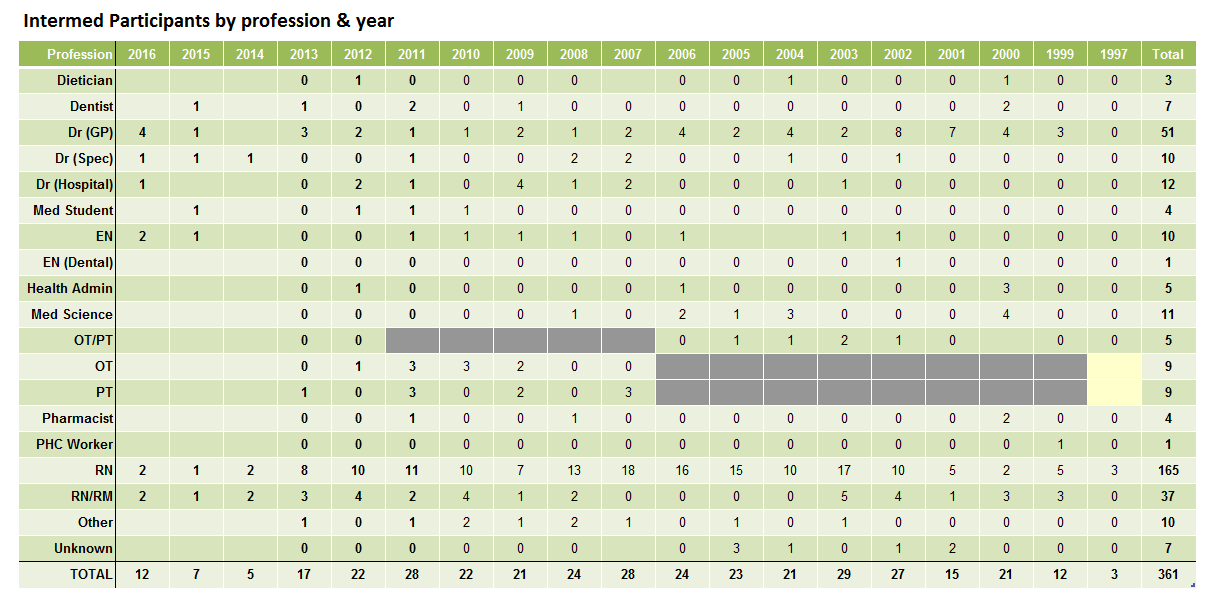
Track Record Since Intermed was established in 1994, over 300 participants (average 25 per course), have come from all Australian states, Aboriginal communities, New Zealand, Bangladesh, Brazil, China, Germany, India, Indonesia, Malaysia, Cambodia, Nepal, Papua New Guinea, Zambia, the USA, Korea, Singapore and Thailand. Many participants have gone on to work successfully for governments, aid organizations and missions, in Africa, Asia, South America, the Pacific and Australia.
Over 1000 health workers have now attended Intermed courses and its variations in a number
of countries, including the USA, England, Brazil, Taiwan and Australia. The class in the
Australian program grew from 3 in 1995 to an average of over 20 each year from 1998, until
numbers declined from 2014. Most participants learnt about the Summer School by 'word of mouth'
from former participants, or from their churches and mission organisations.
Personal Stories Intermed is a rewarding, insightful and engaging
course that brings together passion, knowledge and skill development in
the one place. Intermed has changed the direction of my career
by offering qualified medical training that deepened my clinical
understanding and awareness of global issues.
I did the Intermed course as a very junior doctor in
2005. Throughout medical school, I had always told myself that I was
going to be a "missionary doctor". I enrolled in this course seeking
wisdom and direction from the Lord. The course confirmed this calling
in no uncertain terms for me! Later that year I undertook Intermed's
optional 'Overseas Practicum'. We went to East Timor and Indonesia.
Here again my calling was confirmed by the joy and excitement I had in
being able to provide free health care to poor people in Jesus' name.
Since then, I have joined the Intermed Committee, have taught during
the course and have helped to co-lead all the subsequent Overseas
Practicums. These on-going involvements with Intermed and its course
have continued to enrich my personal, professional and ministry life
each year. Intermed is invaluable in preparing health
professionals for the rigours of cross-cultural living and health care
provision in the developing world. I am incredibly thankful I had
the opportunity to attend and complete the Intermed Summer School for
credit prior to going to Uganda and working amongst the impoverished.
It prepared me for so many health care situations I would face on a
daily basis. I did Intermed to gain the opportunity to work and
study alongside like-minded people who had the desire, calling from God
and need to grow their medical skills, global awareness and compassion
for developing countries and the people. Intermed provided an
environment of knowledge, practical skills and fellowship. Outstanding
medical specialists, skilled third world practitioners, experienced
staff and opportunities to share on deep issues that face the developing
world people provided fertile ground to enlarge my skills and knowledge.
I made lasting friendships and was provided with answers to my own
personal calling. Wonderful, inspiring and highly recommended.
and more… 'Nobody should go into medical mission without
doing this course.'
Founding Agencies The organizations that supported the founding of Intermed were:
Governance Intermed SA is a not-for-profit Association registered with the Office for Business and Consumer Affairs in South Australia (Registered No. A0022641J). Under the Constitution, Intermed SA is managed by a Committee. Committee Members for 2024- 25 are:
In May 2022, Anthony Radford and David Turnbull retired from the Intermed Committee after many years of dedicated service. In May 2024, Sneha Kirubakaran and Margaret Williams stepped down from the Committee and their roles as Chair and Treasurer respectively also after many years of dedicated service. |
 |
||||||||||||||||||
|
_________________________________________________________________________________________________________________
|
|||||||||||||||||||


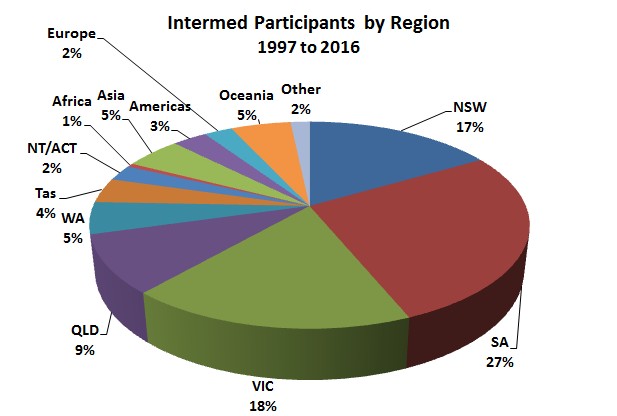
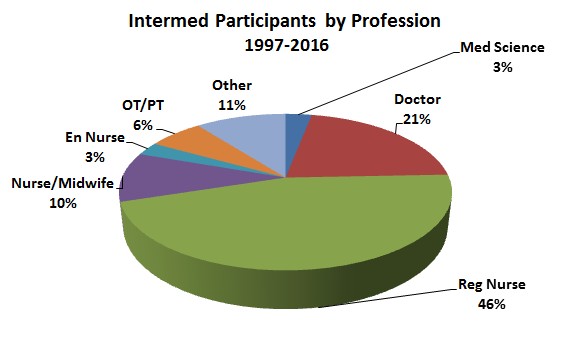
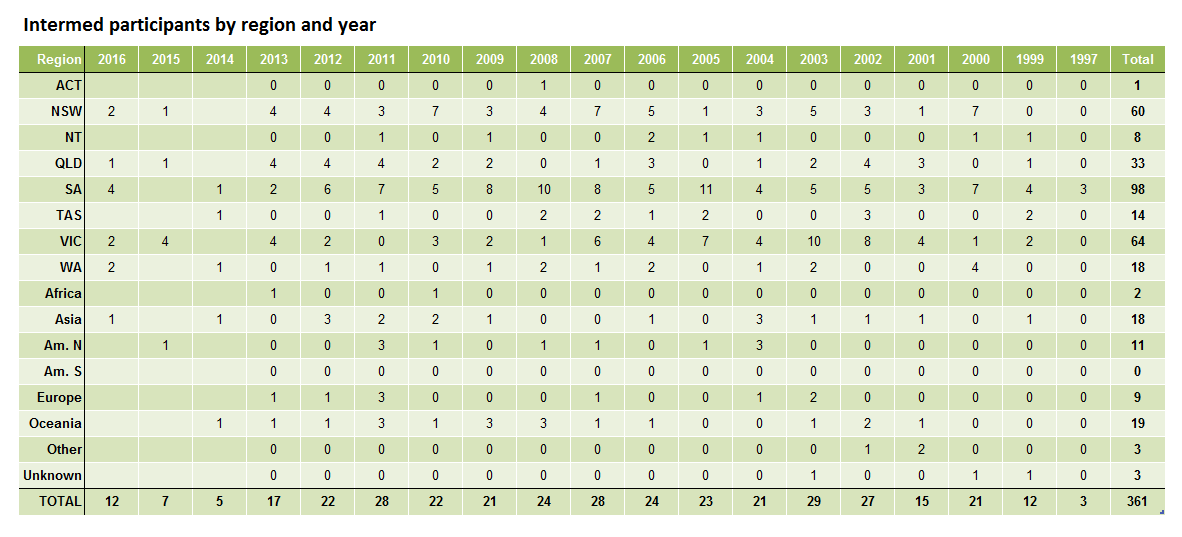 click on the table above for large view
 click on the table above for large view